


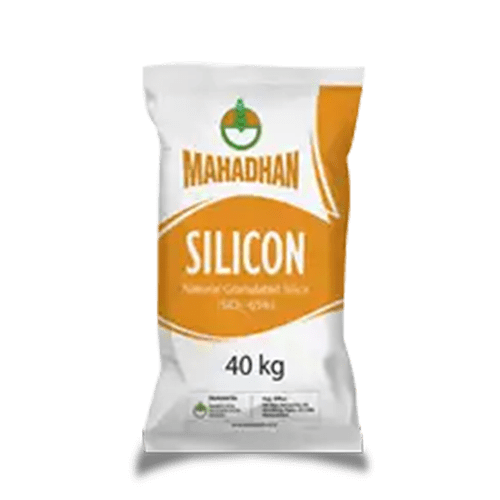
Description
Crops
Paddy, Sugarcane, Fruits And Vegetables
Uses
Plants typically absorb bio-available silicon as a silicate – generally known as monosilicic or orthosilicic acid.
In the soil, Silica is generally abundant as mineral quartz and clays, but its abundance in soluble form (mono-silicic acid) is highly variable.
Plants take up silicon into their root and shoot tissue but it is not returned through shoot tissue, instead it is returned through biodegradation.
Silicon is deposited as silica in the plant cell walls, improving cell wall structural rigidity and strength, plant architecture and leaf erectness.
In plants Si can stimulate nutrient uptake and plant photosynthesis, decrease susceptibility to disease and insect damage, alleviate water and various mineral stresses and decrease the toxic effects of aluminium.
Benefits
Silicon fertilisers can help alleviate abiotic stresses due to acidity, salinity and toxicities.
Silicon fertilisers can help reduce water loss and transpiration
- Strengthens Plant Structure: Deposits silica in cell walls, improving rigidity and erectness.
- Enhances Stress Tolerance
- Improves Nutrient Uptake
- Reduces Water Loss
Reviews
There are no reviews yet.